
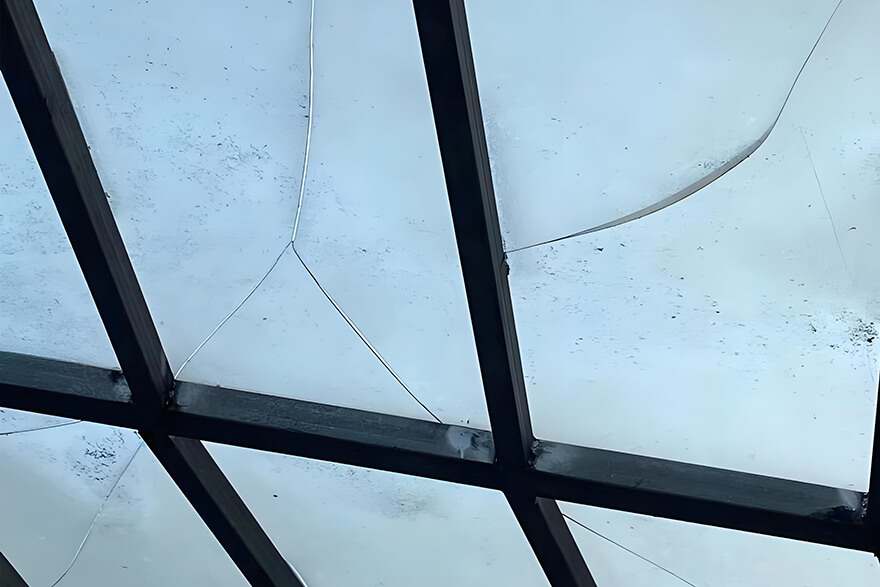
The tiny cracks that appear after bending a PC sheet are professionally known as stress cracking. This is not due to material deterioration, but rather because improper handling triggers the “self-destruction” of the PC molecular chains.
The “Time Bomb” of Internal Stress: When you forcefully bend a PC sheet, the molecular chains are stretched and lock in enormous energy (internal stress). If the bending radius is too small (exceeding the limit of 175 times the sheet thickness), or if excessive force is applied during installation, this internal stress will find an outlet within the sheet. Over time, the molecular chains slowly break under stress, forming fine, visible microcracks.
The Invisible “Chemical Killer”: Often, the most deadly factor is chemical corrosion. PC is extremely sensitive to many everyday chemicals, such as alcohols in cleaning agents, additives in sealants, and even plasticizers in some rubber gaskets. These substances can seep into the stretched molecular gaps, acting like lubricants to accelerate the slippage of molecular chains, causing the sheet to “suicidally” crack without any external impact.
How to avoid pitfalls: During installation, it is strictly forbidden to use sealants containing ammonia, benzene, or methoxyl curing agents. Additionally, if the sheet material is thick, it is recommended to anneal it before bending (heating at a constant temperature for a period of time). This releases internal pressure like a “massage,” significantly extending its service life.
**If you would like to know the advantages of polycarbonate sheets, please kindly check the post [What are advantages of polycarbonate sheets?]
Leave A Comment