
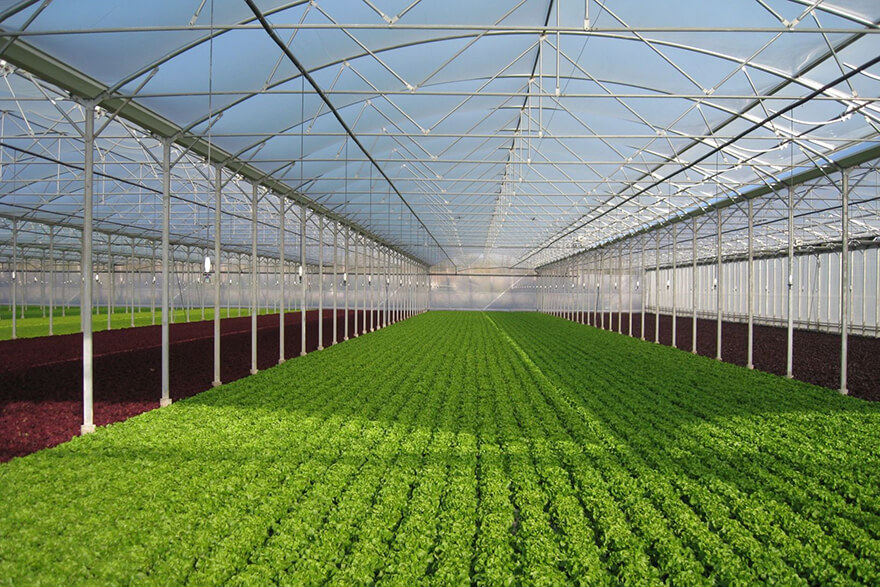
Anti-fog polycarbonate (PC) hollow light-transmitting panels are made with a special hydrophilic coating. This coating significantly increases surface tension, preventing moisture in the greenhouse air from condensing into individual droplets. Instead, the water spreads evenly into a thin film and flows along the ribbed surface of the panel to the edges for drainage, preventing direct dripping.
As the preferred material for greenhouses, anti-drip polycarbonate panels offer the following advantages:
1. Prevents crop damage: Condensation from ordinary polycarbonate panels/greenhouse films drips directly, washing away leaves and petals and easily causing chilling injury. Anti-drip panels allow water to flow along the walls, effectively preventing this type of damage.
2. Reduces the incidence of pests and diseases: Dripping water increases humidity inside the greenhouse, attracting pests and diseases. Using anti-drip panels can maintain relative humidity below 80% for extended periods, significantly reducing the incidence of pests and diseases.
3. Guaranteed Light Transmission: Condensation on ordinary greenhouse films reduces light transmittance by 20%–30%. Anti-drip films, however, do not form dense water droplets that block light, maintaining stable high light transmittance and ensuring crop photosynthesis.
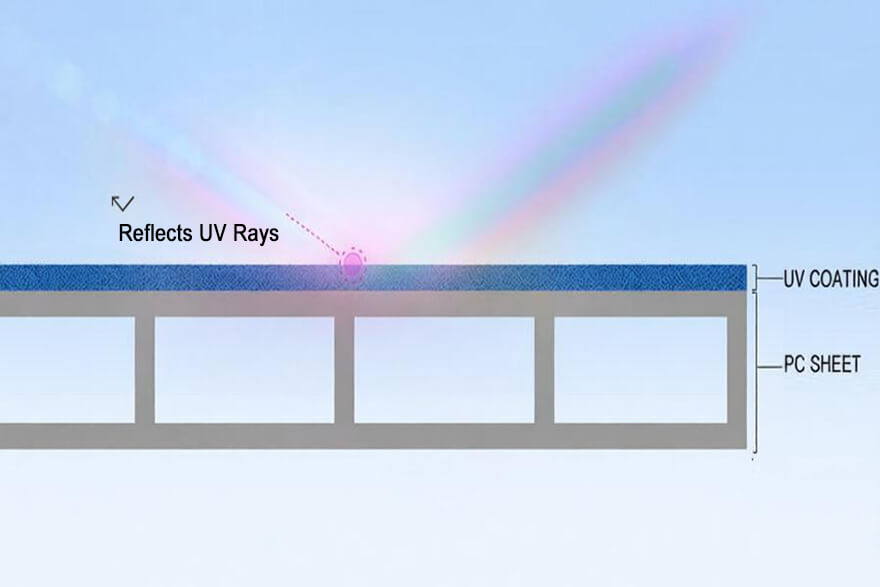
4. Higher Cost-Effectiveness in the Long Run: It features a built-in UV-resistant layer, with an outdoor lifespan of over 10 years, far exceeding the 1–2 year replacement cycle of ordinary greenhouse films. Combined with the heat-insulating advantages of its hollow structure, it reduces heat loss in winter, lowering overall planting costs in the long run.
**If you would like to know the advantages of polycarbonate sheets, please kindly check the post [What are advantages of polycarbonate sheets?]

Leave A Comment