
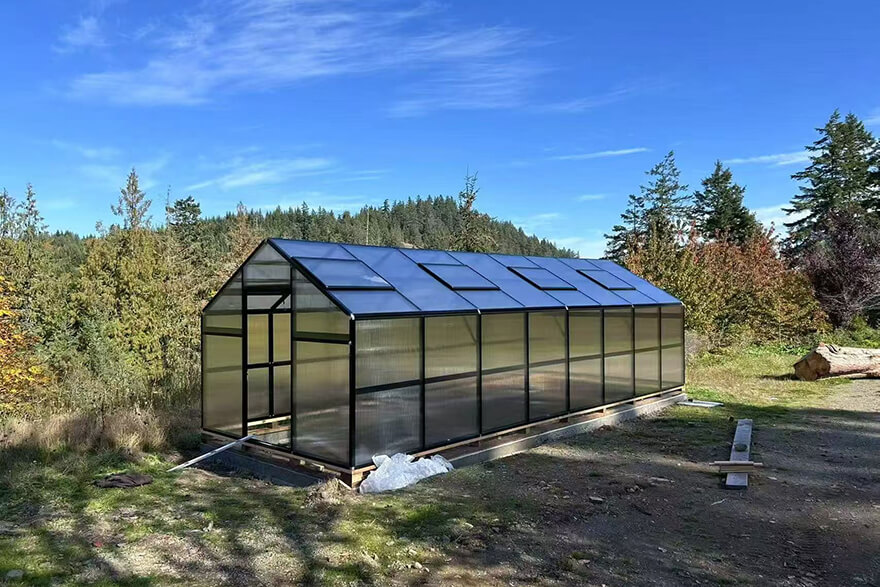
8mm is the most commonly used and widely recommended polycarbonate sheet thickness for greenhouses, as it achieves an optimal balance between strength, insulation, light transmittance, and cost.
Analysis of applicable scenarios for different thicknesses:
4–6mm: Suitable for small or temporary greenhouses, with lower cost and easier installation, but weaker resistance to wind and snow. Suitable for structures with mild climates and small spans.
8mm: Industry standard thickness, especially suitable for most commercial and residential greenhouses. It has good thermal insulation performance (heat transfer coefficient is about 40% lower than single-pane glass), high impact resistance (more than 250 times that of glass), and can effectively reduce air conditioning load, making it suitable for summer cooling and winter insulation.
10–16mm: Used in high wind pressure, large span, or extremely cold regions, providing stronger structural stability and insulation.
In addition, the following should be noted when selecting:
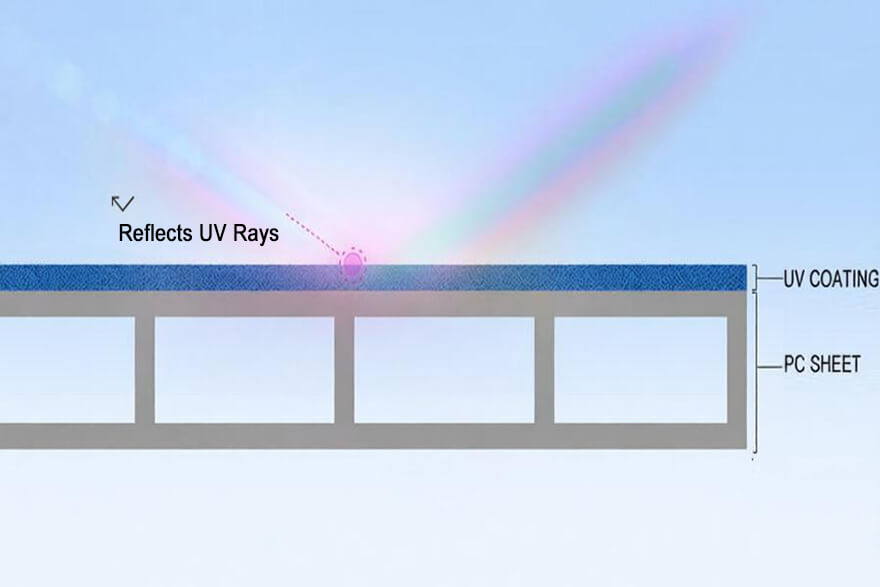
Using 100% virgin polycarbonate materials and co-extruded UV coating can significantly extend service life and prevent yellowing and light transmittance degradation.
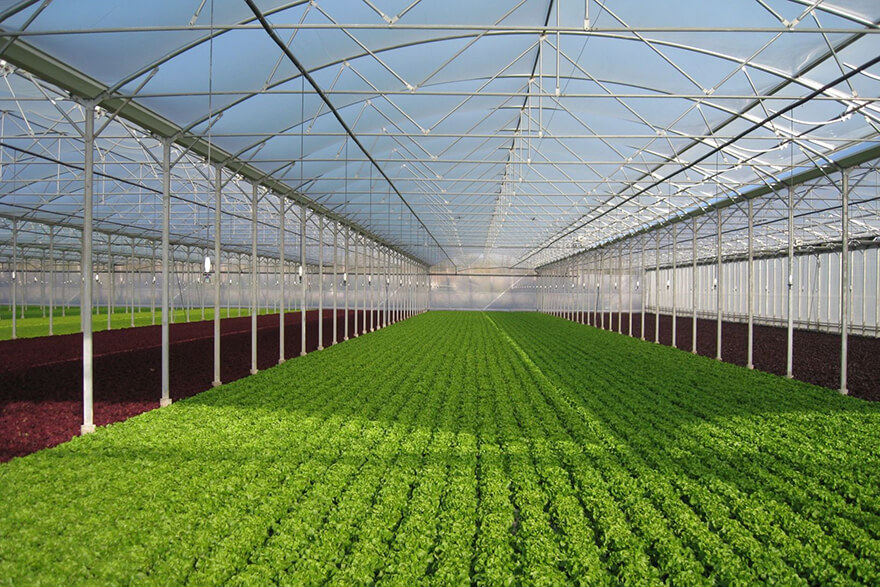
For agricultural greenhouses, it is recommended to use boards with an anti-fogging coating to prevent condensation from dripping and affecting crop growth.
**If you would like to know the advantages of polycarbonate sheets, please kindly check the post [What are advantages of polycarbonate sheets?]

Leave A Comment