
Knowing the Disadvantages of polycarbonates can help us use them correctly.
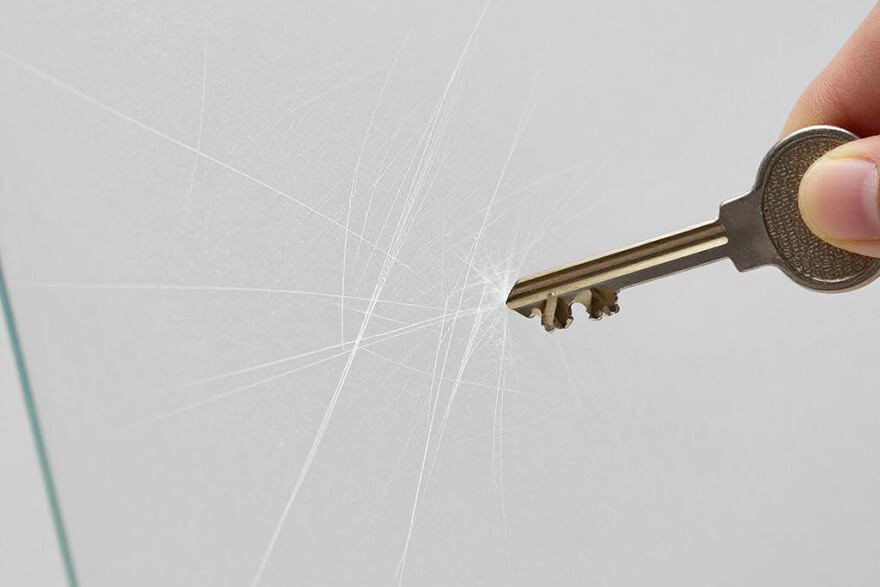
1. Low surface hardness, easily scratched:
PC sheets are relatively soft and have poor surface abrasion resistance, making them easily scratched by sharp objects, affecting aesthetics and light transmission. Although this can be improved by adding a wear-resistant coating, the cost will increase accordingly.
2. Poor chemical corrosion resistance:
PC sheets are not resistant to strong acids, strong alkalis, and some organic solvents (such as ketones and aromatic hydrocarbons). Contact with these solvents may cause stress cracking or material deterioration, limiting their use in chemical environments.
3. The raw material itself is not UV resistant, relying on coating protection:
Polycarbonate substrates are prone to aging, yellowing, and fogging under long-term UV exposure. Therefore, a UV-resistant coating is essential to extend its lifespan. If the coating quality is poor or the thickness is insufficient, the sheet will age rapidly.
4. High coefficient of thermal expansion, requiring space for installation:
PC sheets expand and contract significantly with temperature changes. If sufficient expansion gaps are not provided during installation, internal stress can easily occur due to temperature changes, leading to deformation, cracking, or damage around screw holes.
5. Higher Cost:
Compared to ordinary plastic or PVC sheets, PC sheets are more expensive, especially imported high-quality sheets, which may affect material selection decisions for budget-sensitive projects.
6. Prone to Static Electricity Accumulation and Dust Attraction:
PC sheets have low surface resistance, making them prone to static electricity and easily attracting dust and dirt. Regular cleaning is required to maintain light transmission and appearance.
**If you would like to know the advantages of polycarbonate sheets, please kindly check the post [What are advantages of polycarbonate sheets?]
Leave A Comment